Wave Soldering: Trends for High-Volume Production

Wave soldering is shifting from a simple conveyor process to a tightly controlled thermal management system. High-volume buyers should focus on profile stability, leadless component handling, and mixed-technology design rules. These trends reduce defects and support reliable throughput.
- Wave soldering now requires tighter thermal control to support leadless components and high-density boards.
- Mixed-technology production is pushing manufacturers to design for both SMT and through-hole zones on the same line.
- Buyers should request process data, not just yield rates, when evaluating a contract manufacturer.
- Pre-solder paste or flux application strategies are becoming standard for complex boards.
- Distinguish between a basic wave line and a line with dedicated leadless or high-reliability capability.
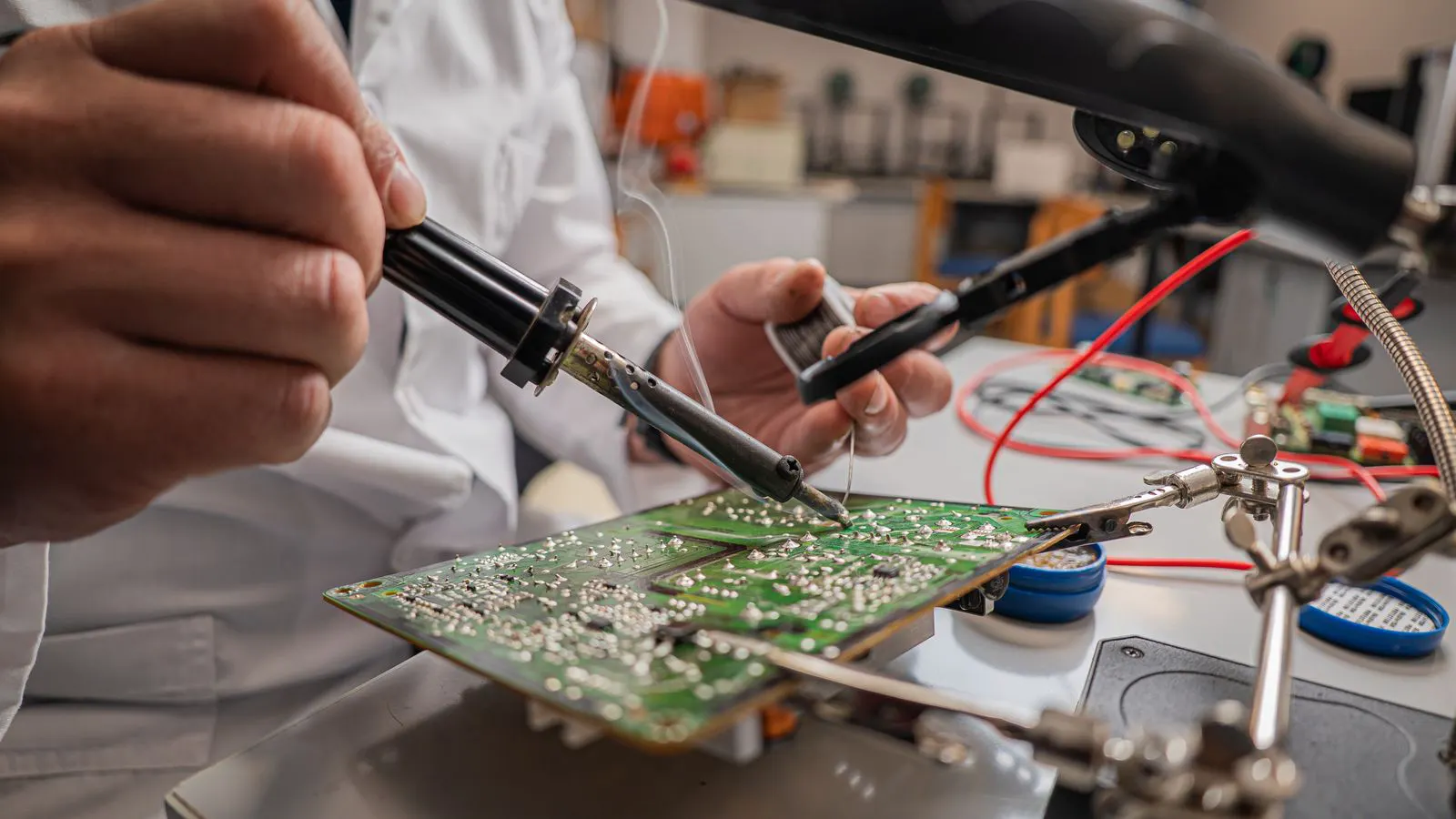
Wave soldering remains a workhorse for high-volume through-hole and mixed-technology boards. The process has not disappeared, but the expectations around it have changed. Buyers who treat it as a simple conveyor and dip step are likely to see yield issues or rework costs. The modern wave line is a controlled thermal environment. It must handle different part heights, different alloys, and different board thicknesses without drifting out of spec.
This article outlines five practical shifts buyers should plan for. Each shift affects how you design, how you specify, and how you evaluate a contract manufacturer.
1. Tighter Thermal Control Is Now the Baseline
Early wave soldering relied on a broad temperature window. Today, the window is narrower. Leadless components, thin substrates, and fine-pitch connectors require precise time and temperature exposure. A board that spent too long in the preheat zone may suffer thermal shock or flux activation problems. A board that spent too little time may not wet properly.
Manufacturers are moving toward closed-loop control. Sensors monitor the solder bath, the preheat oven, and the cooling section. Data is logged for each board or each batch. This matters because defects often show up weeks after assembly, not on the line. If a cold joint appears in the field, the production log can show whether the preheat was low or the wave height was off.
When you review a quote, ask for the control method. Do not accept a generic statement about temperature stability. Ask which sensors are used, how often the bath is sampled, and whether the profile is locked per job.
2. Mixed-Technology Lines Are the New Standard
Fewer boards are pure through-hole. Most high-volume boards now carry a mix of SMT and through-hole components. Some boards carry no SMT at all, but the line still needs to handle the occasional mixed job without a full teardown.
This shift changes how the line is laid out. A pure through-hole line may have a short preheat and a simple wave section. A mixed-technology line needs a preheat oven that can handle SMT paste without burning it, a wave section that does not damage SMT parts, and a cooling section that protects heat-sensitive components.
If your board has both SMT and through-hole parts, you need to specify the process order. Some manufacturers will place the through-hole parts first, then run the SMT reflow, then run a final wave or selective solder step. Others will wave first and reflow second. The choice depends on part placement and board design.
Do not assume the manufacturer will pick the best order for you. Review the process flow with them. A small change in sequence can save a rework cycle.
3. Leadless and Fine-Pitch Parts Change the Wave
Leadless components are common in power modules, automotive parts, and high-frequency boards. These parts are sensitive to thermal shock and require precise wetting. The solder must flow into the fine pads without bridging or leaving a gap.
The wave itself has changed. Some lines use a single wave. Others use a double wave, where the first wave prewets and the second wave completes the joint. The wave height and speed matter. A low wave may not reach the bottom of a connector. A high wave may flood a fine-pitch array.
When you design for wave soldering, give the manufacturer room. Avoid placing critical through-hole parts too close to the wave edge. Keep the part height consistent within a group. If you must place a large connector next to a small resistor, flag it in the notes. The assembler can adjust the wave height or use a selective process for that section.
4. Flux and Paste Strategies Are Becoming More Specific
Flux is not just a cleaning aid. It controls wetting, prevents oxidation, and helps the solder flow. For high-volume production, the flux choice is a process variable.
Some boards use a standard rosin flux. Others use a no-clean flux for a final assembly step. For mixed-technology boards, the flux must survive both the SMT reflow and the wave step. A flux that works well for reflow may burn off before the wave. A flux that works for wave may leave residue that attracts moisture.
Buyers should ask for the flux type and the cleaning method. If the board will go into a cleanroom or a high-reliability environment, the residue matters. If the board will be potted or conformally coated, the residue may be less of a concern.
For complex boards, some manufacturers apply a selective flux or a solder paste to the through-hole pads before the wave. This helps ensure wetting without relying on the bath alone. It adds a step, but it reduces cold joints.
5. Automation and Data Integration Are Improving Traceability
High-volume production is moving toward full traceability. Each board has a serial number. Each process step logs the board. The data is stored for audit.
This matters for automotive, medical, and aerospace buyers. If a defect appears in the field, the manufacturer can trace the board back to the exact wave run, the exact flux lot, and the exact operator. This reduces the cost of a recall or a corrective action.
It also helps you as a buyer. You can compare process data between runs. If one run has a higher cold joint rate, the data can show whether the preheat was low or the wave height was off.
When you evaluate a contract manufacturer, ask for a sample process log. Do not ask for a generic report. Ask for the raw data from a recent run. A good manufacturer will provide it. A weak one will provide a summary.
How to Prepare Your Board for Wave Soldering
Your design choices affect the wave step more than you might think. A few practical rules help.
- Keep part heights consistent within a group. If a board has a 5 mm connector and a 1 mm resistor in the same wave section, the wave height must be set for the taller part. The shorter part may get too much solder.
- Avoid placing fine-pitch through-hole parts too close to the wave edge. The edge of the wave can be unstable. The center is more predictable.
- Specify the solder alloy. Lead-free alloys have different flow characteristics than leaded alloys. The wave height and temperature must match the alloy.
- Provide a process flow note. If your board has mixed components, tell the manufacturer the order you expect. If you are unsure, ask for a recommendation.
- Request a process data log. This is not a luxury. It is a basic quality tool.
How to Evaluate a Contract Manufacturer
When you compare quotes, do not just look at price per board. Look at the process.
- Ask for the wave type. Single wave, double wave, or selective?
- Ask for the preheat method. Oven, IR, or combined?
- Ask for the flux type and cleaning method.
- Ask for the data log format. Can you receive the raw data?
- Ask for the yield rate for your specific board type, not just the general yield rate.
A good manufacturer will answer these questions without hesitation. A weak one will give vague answers.
A Practical Example
Consider a power board with a large MOSFET, a small resistor, and a 10-pin connector. The MOSFET is through-hole. The resistor is SMT. The connector is through-hole.
If you send this board to a basic wave line, the SMT resistor may be damaged by the wave heat. The MOSFET may get too much solder. The connector may have a cold joint.
If you send this board to a mixed-technology line, the manufacturer can place the through-hole parts first. Then they can run the SMT reflow. Then they can run a selective wave or a low-height wave for the through-hole parts. The MOSFET gets the right amount of solder. The connector wets properly. The resistor is protected.
The difference is not in the part. It is in the process.
What to Expect in the Future
Wave soldering is not going away. It is becoming more precise. The next five years will see tighter control, better data integration, and more mixed-technology capability. Buyers who plan for these changes will get better yields and lower rework costs.
The key is to treat wave soldering as a controlled process, not a simple step. Ask the right questions. Review the process flow. Request the data. Your board will be better for it.
Frequently asked questions
Is wave soldering still used for high-volume production?
Yes, wave soldering remains common for through-hole and mixed-technology boards. It is not replaced by SMT, but it is now a more controlled process.
How do I know if my board needs a double wave?
Double wave is often used for fine-pitch or leadless parts. It helps wet small pads without flooding the board. Your manufacturer can recommend it based on your part placement.
What is the biggest mistake buyers make with wave soldering?
Treating it as a simple step. Buyers often do not specify the process order or request process data. This leads to cold joints and rework.
Can wave soldering handle SMT parts?
Yes, but only if the line is designed for mixed-technology. The wave must be controlled so it does not damage SMT parts. A pure through-hole line may not be suitable.
How do I verify a manufacturer's wave process?
Ask for a sample process log from a recent run. Do not accept a generic report. The log should show temperature, wave height, and flux lot.