AOI and X-Ray Cost and Lead Time for Small vs Large Runs
Advanced inspection adds cost and lead time. Small runs pay more per board for setup and calibration. Large runs spread fixed costs thinner. Your RFQ must state board size, pitch, and yield expectations to get comparable quotes from assembly houses.
- Fixed setup fees dominate small batch pricing, making per-board costs higher than for large production.
- Board complexity, such as fine pitch or multilayer BGA, drives up X-ray inspection cost significantly.
- Lead time depends on whether inspection is inline or offline, and whether you need full reports or just pass/fail logs.
- A clear RFQ with specific defect tolerance levels prevents quote mismatches during sourcing.
- Compare quotes by normalizing for board area and component density, not just unit price.
What Drives the Final Invoice
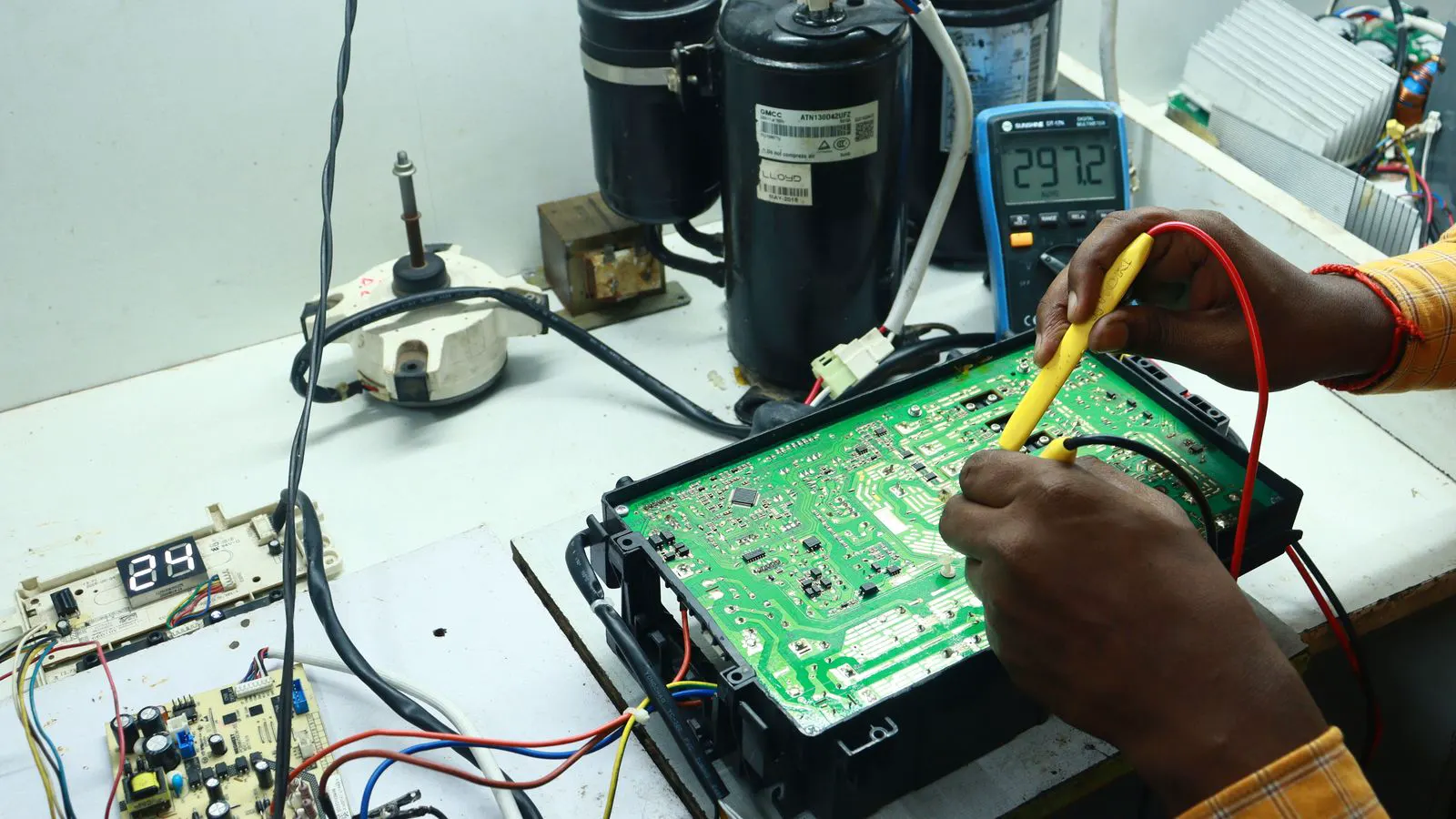
The first number you see on an inspection quote is rarely the actual labor cost. It is a bundle of setup, calibration, and overhead. When you request an estimate for AOI cost, the vendor will often quote a base rate per board. That rate hides the real variables.
For small runs, the fixed costs of loading a new board design into the machine are significant. The operator must define the golden board, set the field of view, and verify the camera focus. This setup time is charged as a flat fee. If you are producing fifty boards, that fee is a large slice of the total. If you are producing five thousand boards, it is negligible.
X-ray inspection follows a different logic. The machine itself is expensive and requires specific maintenance. The cost per board is heavily influenced by the dwell time. A simple QFP package scans quickly. A dense ball grid array requires multiple angles and longer dwell times to resolve the solder fillets beneath the plastic. The more hidden joints you need to verify, the longer the machine runs.
Lead time is the second major factor. Most assembly houses run AOI inline. The board moves through the wave solder or reflow oven and then passes under the AOI scanner. This adds only a few minutes to the production cycle. X-ray is often a separate step. The boards may sit in a queue waiting for the X-ray unit to free up. If you have a tight delivery window, this queue time can push the shipment back by a day or two.
How Batch Size Changes the Math
The relationship between volume and unit price is non-linear. For a small run of twenty to one hundred boards, expect the inspection fee to be a high percentage of the assembly cost. The operator might spend twenty minutes on setup and then scan the boards in ten minutes. That ratio favors large batches.
For medium runs, between five hundred and two thousand boards, the setup cost dilutes. The operator sets the machine once and runs it for hours. The per-board cost drops sharply.
Large runs, exceeding five thousand boards, approach the marginal cost of running the machine. The only costs left are the electricity and the time the machine takes to scan. At this volume, the difference between a “basic” AOI check and a “full” AOI check becomes more about the depth of the report than the raw scanning time.
X-ray cost behaves similarly. The machine is a bottleneck. If you have three X-ray units and a high volume, the queue is short. If you have one unit and a low volume, the queue is long. The cost is often quoted as a flat fee per board, but you must ask if that includes the setup for the X-ray protocol.
What Board Complexity Actually Costs
Not all boards are scanned the same way. A simple two-layer board with through-hole components is cheap to inspect. The AOI camera sees everything. The X-ray is often unnecessary unless you have hidden solder joints.
A multilayer board with BGA packages is expensive. The AOI can check the top and bottom surfaces. It cannot see the solder inside the BGA. You need X-ray for the internal solder joints. The AOI checks the outer solder mask and the top of the component. The X-ray checks the fillets.
The pitch of the components matters. A 0.4 mm pitch BGA requires a higher resolution camera and a more expensive X-ray protocol. A 1.0 mm pitch BGA is standard. If your design has mixed densities, the cost will be based on the most complex section.
How to Write a Clear RFQ
A vague RFQ leads to a vague quote. If you just ask for “AOI and X-ray,” you will get two different prices from two different vendors. You must define the scope.
- State the board dimensions and the number of layers.
- List the highest density component package used.
- Specify if X-ray is needed for all BGAs or only specific units.
- Define the yield expectation. Do you want 100% inspection or a sample check?
- Ask for the lead time added to the production schedule.
Do not assume the vendor knows your defect tolerance. A “pass” in one factory might be a “fail” in another. Define what you consider a defect. Is a slight misalignment of a resistor a fail? Is a small void in a BGA a fail? The stricter the tolerance, the higher the AOI cost. The machine will flag more defects, and the rework team will spend more time.
How to Compare Quotes Fairly
Do not compare the headline price. Look at the breakdown. One vendor might charge a low setup fee but a high per-board rate. Another might charge a high setup fee but a low per-board rate.
For small runs, the total cost is what matters. The setup fee is unavoidable. You are paying for the labor to program the machine. For large runs, the per-board rate is what matters. You are paying for the time the machine spends scanning.
Also compare the lead time. A cheaper quote that adds three days to your delivery window is not cheaper if it causes you to miss a customer deadline. Ask the vendor to confirm if the inspection is inline or offline. If it is offline, ask for the queue time.
The report quality is a hidden cost. A basic report tells you pass or fail. A detailed report shows the location of the defect and a magnified image. If you need the detailed report for your quality records, make sure it is included in the quote. Some vendors charge extra for the data export.
Lead Time Implications for Production
The scheduling impact of inspection is often underestimated. AOI is usually inline. The board goes through the furnace, then the AOI. The machine might take 30 seconds to scan a complex board. In a run of 1,000 boards, that adds 50 minutes to the cycle. This is usually absorbed in the production schedule.
X-ray is the variable. If the X-ray unit is shared with other jobs, your boards might wait. The vendor should tell you the current queue time. If the queue is four hours, and your production line is running 24 hours, your boards sit for four hours. If your delivery is tight, this is a risk.
Ask if the vendor can prioritize your job. Prioritization usually costs extra. It means they stop their current job to run yours. For a small run, this might be the best option. You pay a premium to get the boards out the door faster.
Common Mistakes in Sourcing
The most common mistake is assuming inspection is free. It is not. It is a value-add service. If a vendor says inspection is included, ask what is included. Is it AOI only? Is X-ray excluded? Is the report excluded?
Another mistake is not defining the golden board. If the vendor builds the inspection program from a sample, and that sample has a defect, the machine will learn to ignore that defect. You must provide a known good sample and a known bad sample if possible.
Finally, do not ignore the rework loop. If the AOI finds a defect, the board goes back to the solder station. This adds time. The quote for inspection should ideally include the rework labor, or you must price it in separately. If the rework is not included, your cost is higher than the quote suggests.
Frequently asked questions
Is AOI inspection cheaper than X-ray for every board?
Yes, AOI is generally less expensive per board because it uses cameras rather than X-ray tubes. However, X-ray is often necessary for multilayer boards with hidden solder joints, which adds to the total cost regardless of the per-board rate.
How much does the lead time increase with X-ray inspection?
It depends on the queue at the facility. For small runs, the queue can be short. For large runs, the queue is longer. You should ask the vendor for the current queue time and the estimated dwell time per board.
Can I get a lower AOI cost by doing a sample inspection instead of 100%?
Yes, but you take on more risk. Sample inspection means only a portion of the boards are checked. If you miss a defect in the sample, you may have defects in the untested boards. This is a trade-off between cost and risk.
What information do I need to provide to get an accurate quote?
You need to provide the Gerber files, the component placement file, and a list of the highest complexity packages. You should also specify the yield expectation and the report format you need.
Does the board size affect the cost?
Yes. Larger boards take longer to scan. The machine must move the board or the camera to cover the entire surface. A large board with low component density might cost more to scan than a small board with high density.