How to Reduce PCB Lead Time Without Sacrificing Quality
Reducing PCB lead time requires early design changes, tight vendor management, and parallel processes. This guide covers practical steps to accelerate manufacturing while keeping quality standards intact.
- Start lead time reduction at the design stage by optimizing component placement and footprint selection.
- Run engineering, procurement, and fabrication in parallel rather than waiting for one stage to finish.
- Choose suppliers based on communication and capacity, not just price.
- Maintain quality through standardized inspection points and clear acceptance criteria.
- Use a decision checklist to evaluate suppliers before placing production orders.
What is driving your current PCB lead time
Most teams treat PCB lead time as a single number. In practice, it is a chain of handoffs. A typical project moves through design review, component procurement, fabrication, assembly, testing, and shipping. Each handoff adds days. A single missing component or a late design revision can stall the entire line.
The problem is rarely that one factory is slow. The problem is usually how the project is sequenced. If your team waits for final design sign-off before contacting suppliers, you lose weeks. If you request quotes for every component at the same time, you lose days to back-and-forth. The goal is to compress these handoffs without cutting corners on inspection or material selection.
Consider a standard industrial controller board. The schematic is ready on Monday. The layout is finished by Friday. If the team waits until the next Monday to send the Gerber files to the fab house, the board is already three days behind schedule. By the time the quote is reviewed, the board is five days late. Meanwhile, the BOM has been sitting in a spreadsheet, and no one has checked whether the high-speed network connector is in stock. This is how lead time quietly balloons. The delay is not in the soldering or the drilling. It is in the silence between the design team and the supply chain.
How to shorten the design and engineering phase
The biggest lever sits before the first quote arrives. Engineers can cut weeks off the schedule by locking the board design early. Review the schematic for components that are obsolete, have long lead times, or come in only one package size. If a part has a 40 week supply, find an alternative with a 4 week supply before the design is finalized.
Check the PCB layout for fabrication constraints. Keep trace spacing, hole size, and copper thickness within standard ranges. Every deviation pushes the board into a custom fabrication queue. A board that uses standard 62 mil trace spacing and 0.8 mm drill holes will move faster than one that requires 45 mil spacing and 0.5 mm holes.
Select component footprints with a second source in mind. If a connector only fits one manufacturer, your assembly line is locked to that vendor. If a second source exists, your procurement team can pick whichever lot arrives first. This flexibility alone can shave days off the total schedule.
Think about stackup early. If you need a 4-layer board with a specific impedance, confirm that your chosen fab house has the laminate available. Some laminate types have longer lead times than standard FR-4. If you specify a material that is not in stock, the fabrication date shifts. A simple check against the manufacturer’s material availability chart prevents a two-week delay that could have been avoided with a standard material selection.
Also review the BOM for packaging efficiency. If you are ordering 1,000 units, ask your supplier if components can be provided in larger quantities to reduce handling time. Bulk packaging for resistors and capacitors speeds up the line. However, if the project is a low-volume prototype, large packages may be overkill. Match the packaging to the volume. For a 50-unit run, individual reels or bags are more practical than bulk trays.
How to run procurement and fabrication in parallel
Traditional projects follow a linear path. Design finishes, then procurement starts, then fabrication, then assembly. Parallel processing breaks that sequence. Once the schematic is stable enough to identify part numbers, start sourcing components. Fabrication can begin as soon as the layout is approved, even if some components are still on order.
Create a shared status board that tracks every item. List each component, its supplier, its expected arrival date, and its criticality. If a non-critical part is two days late, assembly can continue. If a critical part is late, the team can reroute the order or use a backup lot. This visibility prevents surprise stalls.
Use a single supplier for fabrication and assembly when possible. A contract manufacturer that handles both processes keeps the physical board in one location. There is no shipping between factories, no re-inspection at a handoff, and no lost time in transit. The trade-off is that you lose the ability to choose separate best-in-class vendors for each step. For most projects, the time saved outweighs the trade-off.
Parallelization requires discipline. You need to know which parts are critical to the first board. If the board cannot be powered on without the main microcontroller, that part is critical. If a status LED is missing, the board can still be tested for other functions. Prioritize the procurement of critical parts. For non-critical parts, accept a later arrival date. This triage prevents the entire assembly line from waiting on a single slow item.
Coordinate the delivery of boards and components. If the fab house can ship the bare boards three days early, ask them to do so. If the component supplier can deliver in two batches, ask them to send the critical components first. This staggering aligns the material flow with the production schedule. It reduces the need for large warehousing spaces and keeps the team focused on the next step.
How to evaluate suppliers for speed and reliability
Supplier selection for speed is not about finding the cheapest option. It is about finding the partner that can execute your specific schedule. The table below lists the criteria that matter most when comparing vendors.
| Criterion | What to look for | Why it matters |
|---|---|---|
| Communication cadence | Daily status updates during critical windows, a dedicated project manager | Catches delays early and keeps the team aligned |
| Capacity | Available machine hours, shift structure, buffer stock for common materials | Determines whether they can hold your date |
| Quality controls | In-process checks, final testing methods, documentation | Protects yield and reduces rework |
| Lead time transparency | Published standard times plus a clear path to expedite | Lets you plan and negotiate realistically |
| Flexibility | Willingness to adjust scope, accept partial shipments, or run parallel jobs | Keeps the project moving when something slips |
A supplier that can tell you exactly why a job will be late is more valuable than one that promises an aggressive date and then goes silent. Ask for their standard process flow. Ask what happens when a component does not arrive. Ask how they handle a design change after the order is placed. The answers will reveal how much buffer they actually have.
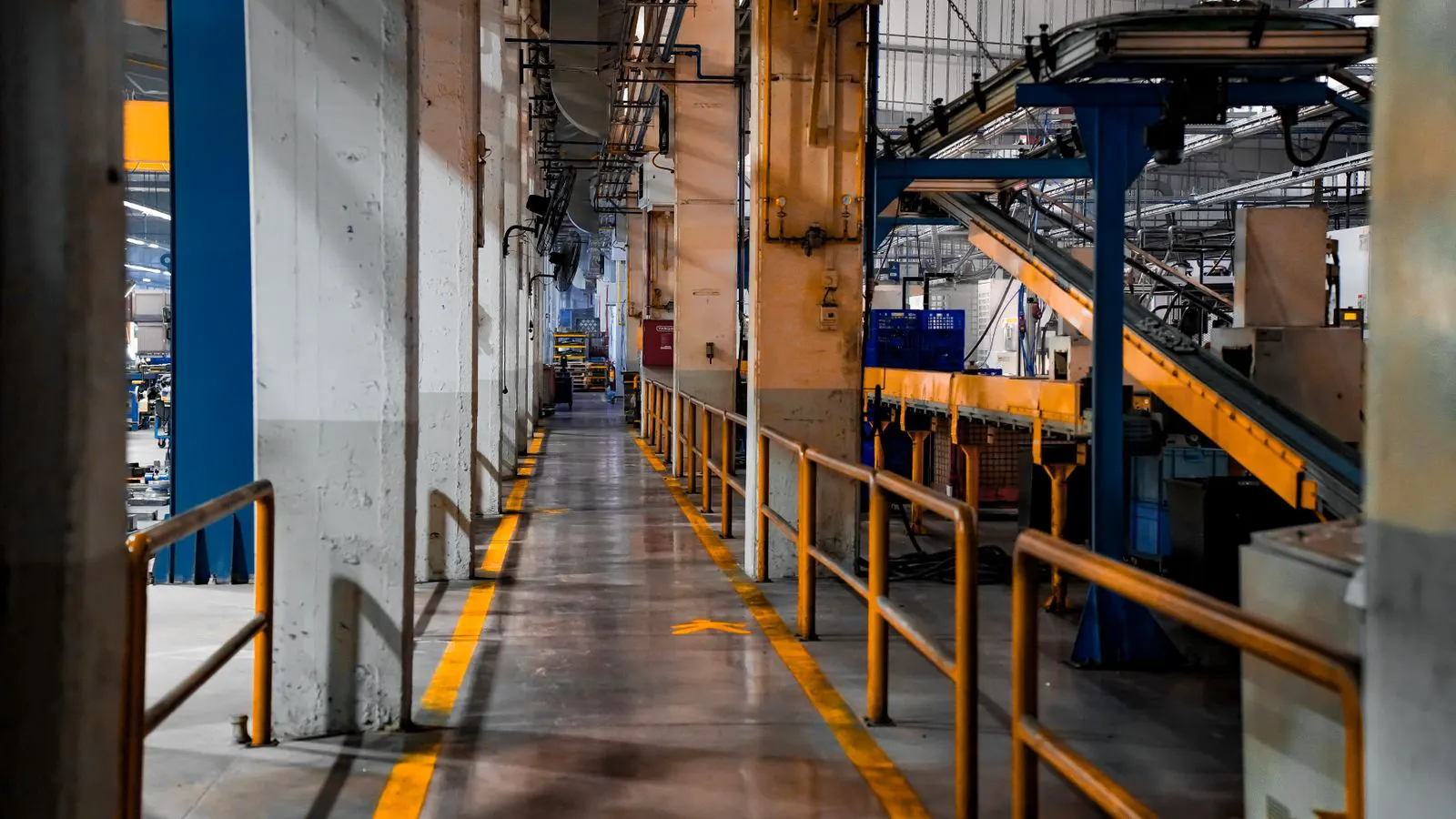
Look at their production floor during a site visit if possible. Observe the flow of work. Do boards move from one station to the next in a logical sequence? Is there a bottleneck where boards pile up? The physical layout of the facility often reflects the efficiency of the process. A cluttered floor with mixed work in progress suggests poor scheduling. A clean, organized line with clear workstations suggests better control.
Check their past performance with similar projects. Ask for references from clients who had tight deadlines. Did the supplier meet the date? If not, why? Did they communicate early? These details matter more than the initial quote. A supplier who misses a date but communicates clearly is easier to work with than one who misses a date and disappears.
How to keep quality high while moving faster
Speed and quality are not opposites, but they compete for attention. If you rush inspection, you ship bad boards. If you inspect too slowly, you eat up the schedule. The solution is to place inspection at the right points, not everywhere.
Start with incoming material checks. Verify component part numbers, date codes, and physical condition before they touch the assembly line. A wrong resistor is cheap to catch at the dock. It is expensive to catch after it is soldered and tested.
Use in-process checks during assembly. After the first few boards come off the line, stop and inspect solder joints, component placement, and polarity. If the first board has a problem, the next fifty will too. A short pause at this stage prevents a long rework cycle later.
Finish with a defined acceptance test. Specify exactly what the final test covers. A functional test that verifies power, communication, and safety circuits is more useful than a visual check alone. Write the test procedure into the purchase order. When both sides agree on the definition of done, there are fewer disputes at handoff.
Define the inspection frequency. If the board is complex, inspect every unit. If the board is simple and the process is mature, inspect a sample. For example, a power supply board with high voltage components requires more rigorous inspection than a simple data logger. Match the inspection level to the risk. Over-inspection wastes time and money. Under-inspection risks field failures.
Keep a log of defects. If the same type of defect appears repeatedly, trace it back to the source. Is it a component issue? A soldering issue? A design flaw? Fixing the root cause prevents the defect from returning. This continuous improvement loop keeps quality high without adding unnecessary inspection steps.
How to build a repeatable production efficiency system
One-time speedups are not enough. You need a system that makes every project faster than the last. Create a standard operating procedure for each phase. Document the design checklist, the procurement workflow, and the inspection points. When a new engineer joins the team, they follow the same steps. When a new supplier comes in, they meet the same criteria.
Track your actual lead time against your target. If a project was supposed to take 28 days and took 41, log the reasons. Was it a late component? A design change? A supplier capacity issue? Patterns emerge over time. You will likely find that the same bottleneck appears in multiple projects. Fix that one root cause and every future project gets faster.
Build relationships with your suppliers. When you have a regular volume, they start to understand your priorities. They may offer earlier quotes, hold stock for your common components, or give you first access to new capacity. These relationships are not about favoritism. They are about predictability. A supplier who knows your project well can anticipate your needs and respond faster.
Review your processes regularly. Technology and supply chains change. What worked last year may not work this year. Update your SOPs based on real data. If a new component supplier is faster, update your procurement workflow. If a new inspection tool improves yield, update your quality plan. Keep the system alive.
Decision checklist before placing an order
Use this list to confirm your plan before you commit to a supplier.
- Design is finalized and all component alternatives are identified.
- Critical path components have confirmed lead times.
- Supplier communication plan is in place with named contacts.
- Inspection points are defined and written into the purchase order.
- Parallel processes for fabrication and procurement are scheduled.
- A backup plan exists for the top three risk items.
Frequently asked questions
Can I reduce PCB lead time by just paying for expedited service?
Expedited service helps, but it only addresses the final manufacturing steps. The biggest gains come from early design changes and parallel procurement.
How do I know if a supplier can actually meet a tight deadline?
Ask for their standard process flow and capacity details. A credible supplier will share how they schedule jobs and how they handle delays.
Is it worth using one supplier for fabrication and assembly?
For most projects, yes. It removes shipping time and handoff delays, though it reduces your ability to mix and match vendors.
What is the safest way to speed up testing without cutting corners?
Move testing earlier in the process. Check incoming components and run in-process inspections after the first few boards. This catches problems before they spread.
How do I track lead time improvements over multiple projects?
Log actual versus target lead times for each project and record the root causes of delays. Patterns will show which processes need standardization.